Everyone has a story to tell. Childhood memories, important encounters, travels, achievements, challenges, and moments that changed the direction of their life. Yet many people postpone the idea of writing their memoirs, believing they need to have lived an extraordinary life or write a complete autobiography.
In reality, telling your life story can start in a simple way: a few memories, a few dates, and a few photos. Over time, these fragments become a true personal biography.
Why write your memoirs?
Writing your memoirs is first and foremost a way to preserve your life story. As years pass, many details naturally disappear: the first important meetings, the places where you lived, and the emotions connected to specific moments.
An autobiography allows you to look back at your own journey. It helps you understand the choices that shaped your life, the changes you experienced, and the people who mattered along the way.
This is not only about nostalgia. It is a way to better understand your own story and create a personal record that can be revisited years later.
Writing an autobiography: where should you start?
The hardest part is usually not finding memories, but deciding which ones deserve to be included. A lifetime contains thousands of moments, but some events naturally become important milestones.
- Your birth and your early childhood.
- The places where you grew up.
- Your education and things you learned.
- Your first professional experiences.
- The people who changed your life.
- Your relationships, family, and loved ones.
- Your travels and discoveries.
- The challenges you overcame.
- The moments you are most proud of.
These events create the natural chapters of your autobiography and form the structure of your personal story.
Do you need to write a book about your life?
When people think about sharing their story, they often imagine writing a book about their life. It can be a beautiful project, but it requires a lot of time and organization.
Writing hundreds of pages can feel overwhelming. Many people abandon their project because they try to tell their entire life story all at once.
Another approach is to build your story gradually: one important event at a time, whenever memories come back naturally.
How to find forgotten memories?
Memories rarely come back in perfect chronological order. Sometimes a simple detail can bring back an entire period of your life.
- Old photographs.
- Family albums.
- Important conversations and messages.
- The places where you lived.
- Objects kept over the years.
- Documents linked to important milestones.
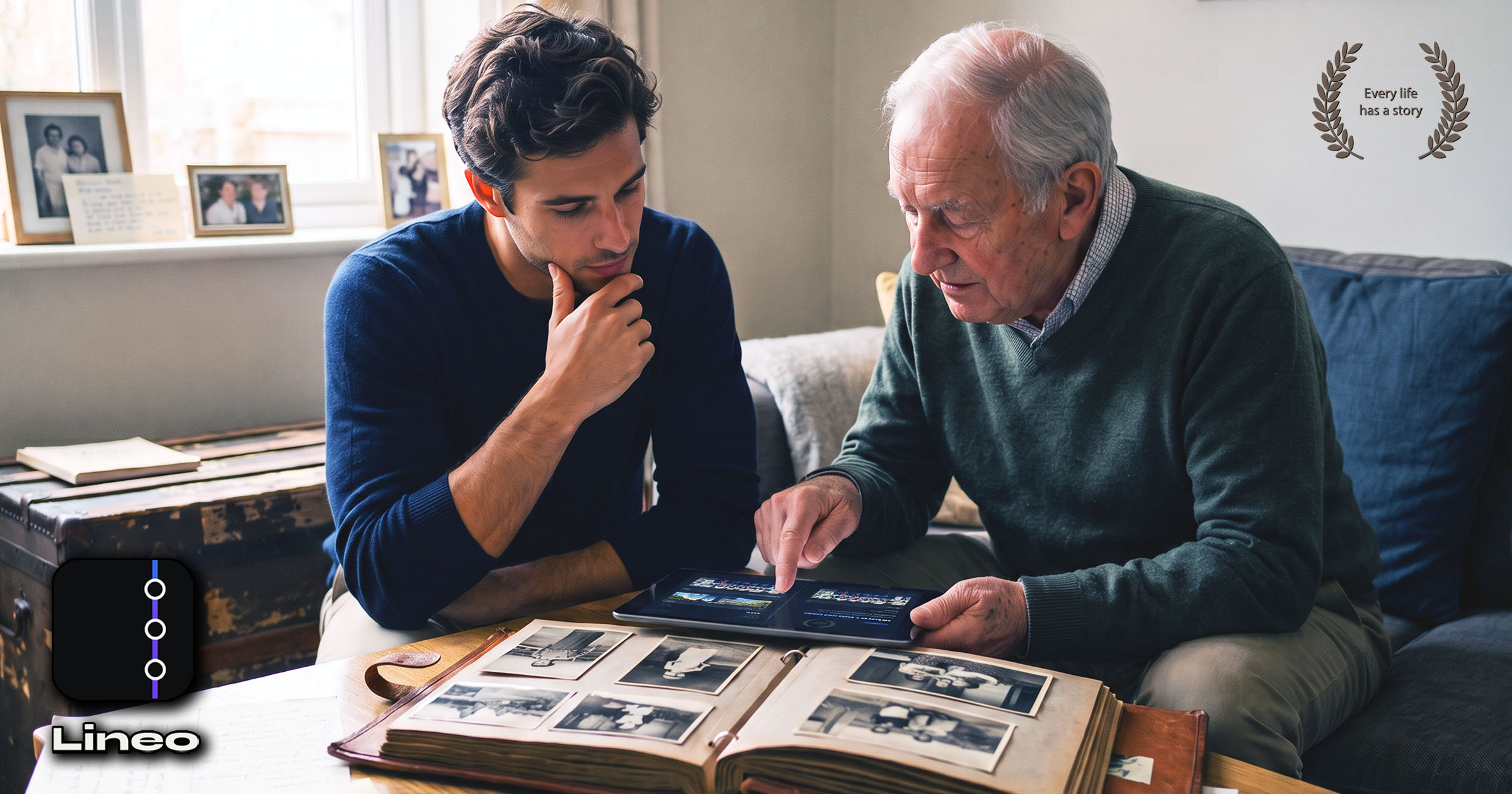
A photo is not just an image. It is often the doorway to a much bigger story.
Passing on your life story to your family
One of the most meaningful reasons to create an autobiography is to pass on your story. Future generations often know a few major facts about their relatives, but they rarely know the small details that truly make a person unique.
What were your dreams at 20 years old? Where did you live? Which encounters changed your path? Which moments brought you the most happiness?
Preserving these memories creates a personal legacy that can be shared with your children, your family, and future generations.
A new way to write your life story
Today, writing your story does not necessarily mean creating a traditional document filled with pages of text. A life is also made of photos, places, dates, and small events that become meaningful when connected together.
This is the idea behind a life timeline: instead of writing your entire autobiography at once, you gradually build your personal story over time.
With Lineo, every event becomes part of your story: a childhood memory, a trip, a relationship, a move, an achievement, or simply a moment that mattered. Photos, dates, and locations help you create a personal biography that grows with you.
Start writing your story today
It is never too early or too late to write your memoirs. You do not need to know the end of your story to begin the first chapter.
A few memories today may become some of the most valuable pages of your life story tomorrow.
In summary
- Writing your memoirs helps preserve your personal history.
- An autobiography can begin with a few meaningful life events.
- Photos and everyday memories are valuable sources for your story.
- Passing on your history is a gift for future generations.
- A life timeline helps you build your personal biography step by step.
